Beautiful in its Newness with Dr Joanna Wheeler
It started with a toothbrush. It ended with a stop-motion film about seasonal depression. Somehow, it became a comedy.
About a year ago, I started working with Dr Joanna Wheeler, founder of TransformativeStory, supporting her to articulate her work in the digital space. During almost every meeting I found myself saying the same thing: The more I learn about this work, the deeper it gets.
Curious, I signed up for Joanna's twelve-week Creative Facilitation for Storytelling course. I expected to learn storytelling techniques. What I didn't expect was how much I would learn about myself through the creation of a stop motion animation. It felt as though the story knew where it was going long before I did.
Six months later, I'm still noticing its effects. Wanting to understand how Joanna had arrived at this way of working, I invited her to share her own journey. What follows is an edited Q&A of our conversation.
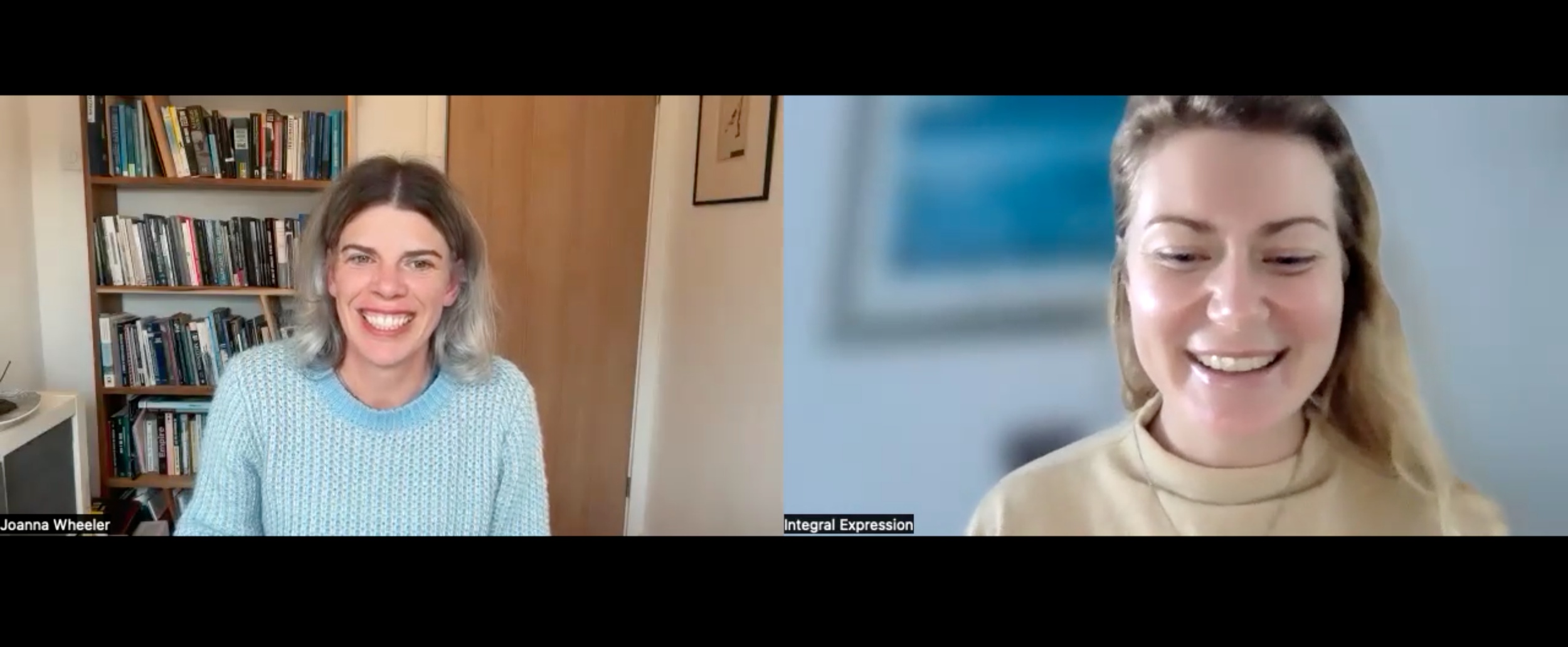
Q: When and how did your fascination with storytelling begin?
Joanna Wheeler:
It started when I was living in Rio de Janeiro around 2000.
I was working on a research project that involved tracking down people who had been interviewed thirty years earlier while living in the favelas. The original research had happened during the dictatorship, so very little information had been recorded because of the restrictions. We would find addresses that said things like "pass the hand pump and it’s the fifth shack on the right. Her name is Maria."
Many of those communities had since been forcibly relocated into housing projects deep in the city. So we spent months trying to find these people, or some of their descendants. Then, when we finally found some of them, I would arrive at someone's house to talk to them, ask a few questions, and five hours later I'd still be there listening.
An interview framework just felt completely inadequate for understanding what was significant in someone's life, what they wanted to tell, and how they wanted to tell it. That was the point where I became interested not just in stories, but in the stories we need and want to tell about our lives and why those stories matter.
For many of the people I met, nobody had asked them about their lives in decades. Many of them felt invisible, ignored, abused and pushed to the margins by the government. And therefore many of these things they experienced also felt invisible. If I had just abided by my conventional training as a researcher, I would have had to cut their stories short and ask them to just stick to the interview questions, but I couldn’t do that. I couldn’t walk away from being there to listen to what they wanted to say.
Q: How did that evolve into the work you do today with its focus on story making?
Joanna:
That was something I pieced together gradually over time.
Back in Brazil I was fortunate to work alongside people influenced by Paulo Freire and community-based creative practice. Theatre, music, participatory video and film were being used to help people explore their experiences and imagine different futures.
But I kept noticing something. Many participatory storytelling approaches gave everyone an equal voice, yet the resulting stories often became diluted. They were equitable, but not always artistically coherent.
So I became interested in a different question:
How do you maintain participation and equity while also creating something artistically powerful?
It’s not that people don’t have the ability to do that, but I think the ways we've often gone about facilitating story haven't always supported people to express what they're actually capable of creating.
Over the following years I learned alongside artists and facilitators working across Zimbabwe, Nigeria, Mexico, South Africa and elsewhere. Each experience added another layer to the work.
From there, I kept adding to that foundation. Community theatre in Nigeria. Street art in Mexico. Drumming in South Africa. Different artists, facilitators and communities all over the world.
What I've really been studying over the years isn't just storytelling; it's human creativity.
How do people create something that genuinely says what they want it to say? What conditions help that happen? And what role does facilitation play in that process?
Every workshop has taught me something new. There is always another edge to explore, another question emerging. At the moment, for example, I'm thinking a lot about what AI means for creative practice and story making.
More recently, I've also found myself looking back over the past twenty or so years and asking a different question:
What is it that we're actually doing in these workshops?
Yes, they're about story. But what does that really mean?
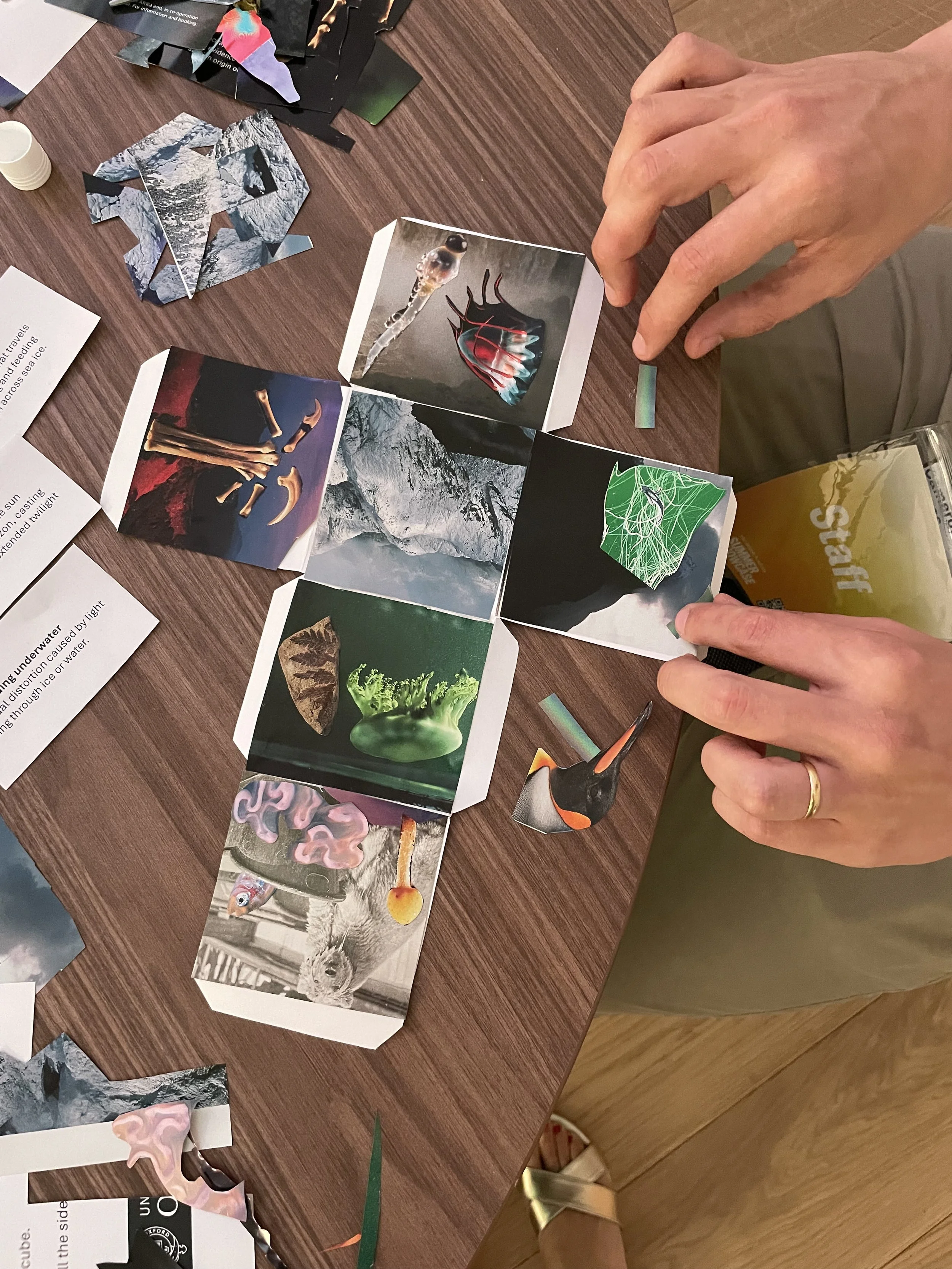
More-than-human stories of Antarctica
Workshop for Oxford University, 2025
Q: So, after all these years, what do you think is actually happening inside a story workshop?
Joanna:
The biggest realisation I've had is that this is an artistic practice, and we have to take that part of it really seriously. It means that the story makers were already artists before they arrived. The workshop isn't turning them into artists; it's offering them an invitation to recognise that part of themselves.
That perspective changes everything. I'm not approaching people as though they lack creativity. I'm taking their creative instincts very seriously from the beginning, because they really matter. What happens then is very different from arriving with a fixed agenda and saying, "I want you to tell a story about this topic."
The workshop becomes much more responsive. The people matter. The space matters. The objects in the room matter. The moment in time matters. You can't untangle those things from the stories that emerge.
I've started thinking of facilitation less as following a plan and more like braiding threads together. You're constantly noticing what is happening, deciding which threads to follow and responding to what emerges. Things are unfolding on many levels at once, even though the process should feel simple for participants. It's more a practice of attention than execution.
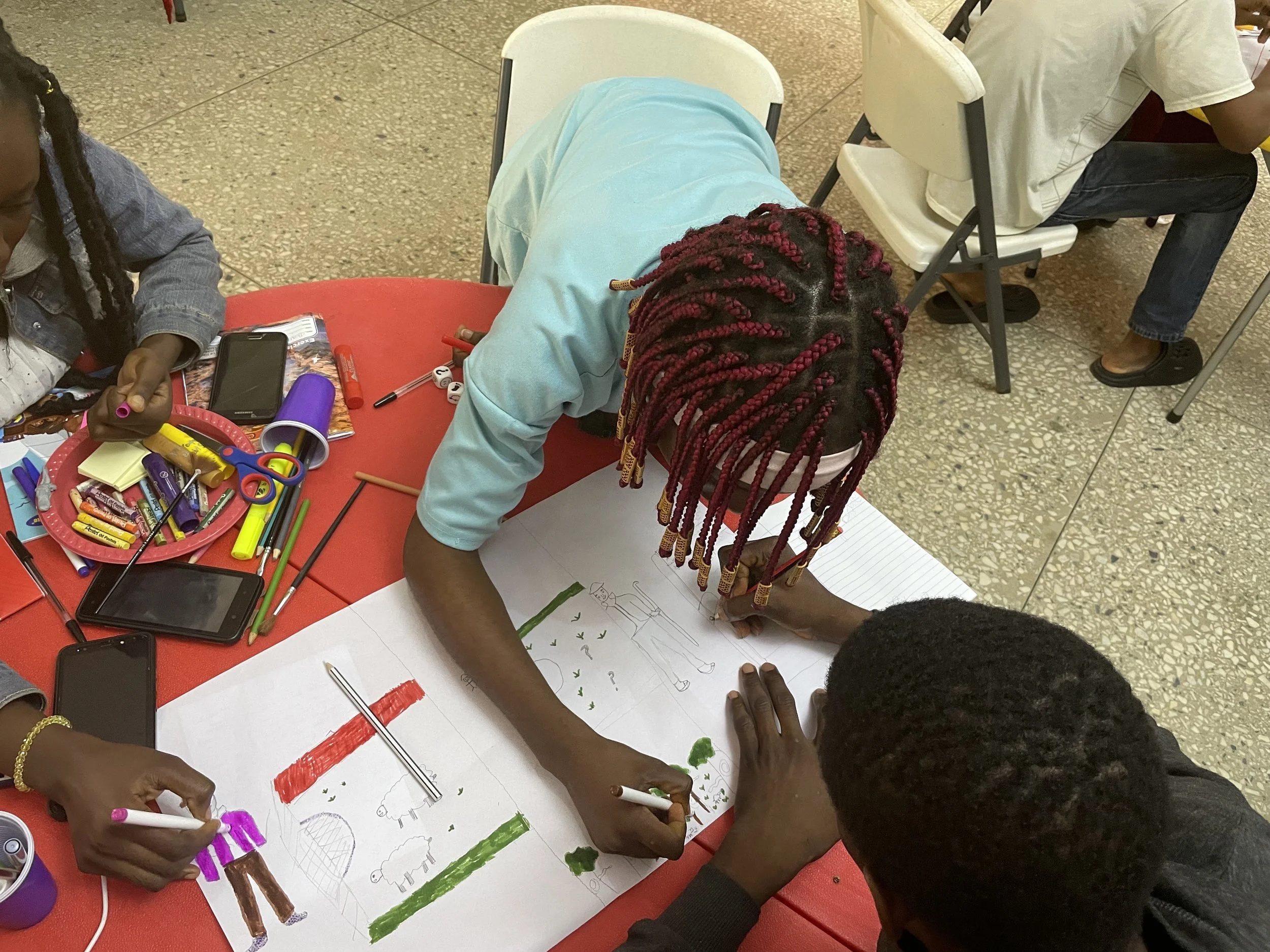
Q: Listening to you, it sounds less like a methodology and more like a relationship.
Joanna:
Yes. Creative expression is a little like gardening. You work with what is there. You can't force something to grow simply because you've decided it should.
Whereas many creative participatory research methods begin by deciding the output. You're going to make a film. You're going to take photographs. You're going to create a theatre piece.
In my workshops, we begin with story. The form comes later.
The question is:
What is trying to be expressed? And what form wants to emerge from that?
That's a very different proposition.
And then even before you think about exercises or facilitation techniques, one of the most important parts of the whole process requires you to ask a much simpler question:
Why would someone want to be part of this workshop?
If people are there because their manager sent them, because an organisation wants to hear their stories, or because someone else has already decided what the outcome should be, it becomes much harder for them to participate in a genuinely creative way.
For any kind of art, there has to be an impulse to create. That impulse can't be manufactured from the outside. It's something people have to discover for themselves.
When I first started doing this work, NGOs would often invite me in and say, "We'd like you to run a storytelling workshop with our beneficiaries because we want to hear their stories."
At the time, I didn't really question it. I thought, Great, let's do a workshop.
Now my first question is different.
Why would they want to tell their stories to you?
If it's simply to confirm what you already think you know about them, then there's very little point. So whenever I’m designing a workshop now, I start there.
If the answers are already decided, then I'm probably not the right facilitator. I definitely didn't have the clarity or courage to say that when I first started. That came with experience.
Q: How has this work changed you personally?
Joanna:
I think it's changed me in a lot of ways. It's really hard to imagine my life without it. It's helped me see much more clearly what matters in life. Being able to recognise how unique each person is and the beauty of that. This might sound clichéd, but that is a real gift because so many things about our lives shut us off from that realisation. And when I'm in a story workshop, there's just so much about each person that is unique and beautiful in what they're doing.
Not beautiful because it's technically perfect, but beautiful in its newness. Beautiful because it has never existed before. Because this particular person made it in this particular way at this particular moment. Being able to see the significance of that and being exposed to that over and over again changes how you see people. It changes how you see life.
One of the things I love most is watching what happens to people over the course of a workshop. Most of us arrive carrying professional identities that organise our everyday lives. As the workshop unfolds, those identities often soften. People become more willing to experiment, to be surprised, to create rather than perform.
When that happens, something shifts in the room. The trust deepens. The creativity deepens too. In many ways, that's what artists do all the time. They create from something that is genuinely alive in them. A story workshop creates the conditions for other people to do that as well.
By the end, what I usually notice isn't just the stories people have made; it's the quality of connection that's grown between everyone in the room. There's a stronger sense of understanding one another, and of valuing each person for who they are. That's probably my favourite part of the work.
What it did really was derail a fairly conventional academic career. I realised I didn't particularly want to spend my life chasing the things academia often asks you to chase, because this felt more important to me. Creating spaces where people can discover something of themselves, and something of one another through story... that's the work I wanted to dedicate my life to.
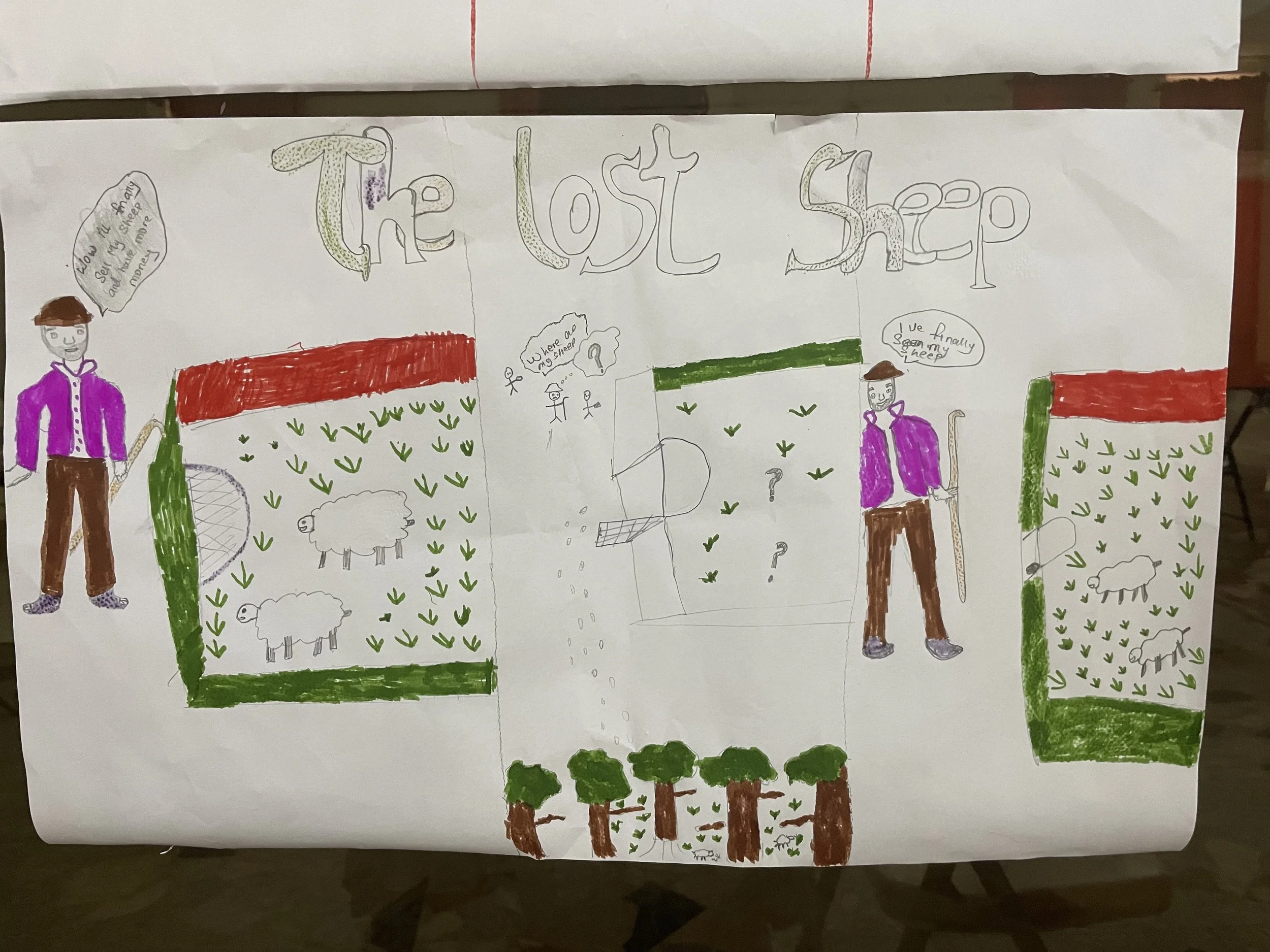
Q: Something I’ve noticed throughout this year of collaboration with you is how naturally you move between different ways of knowing. Has that always come easily, or has story making informed that ability?
Joanna:
I think it was always something that felt fairly natural to me. Story making hasn't created that so much as given me years of practice, not only in doing it myself, but in helping other people do it too.
Living in different countries and languages taught me quite quickly that words are often inadequate for what we're really trying to communicate. Sometimes someone can draw, build or tell something that reveals far more than they could explain.
Story making has helped me recognise those moments, and know when it might help to invite someone into another form of expression.
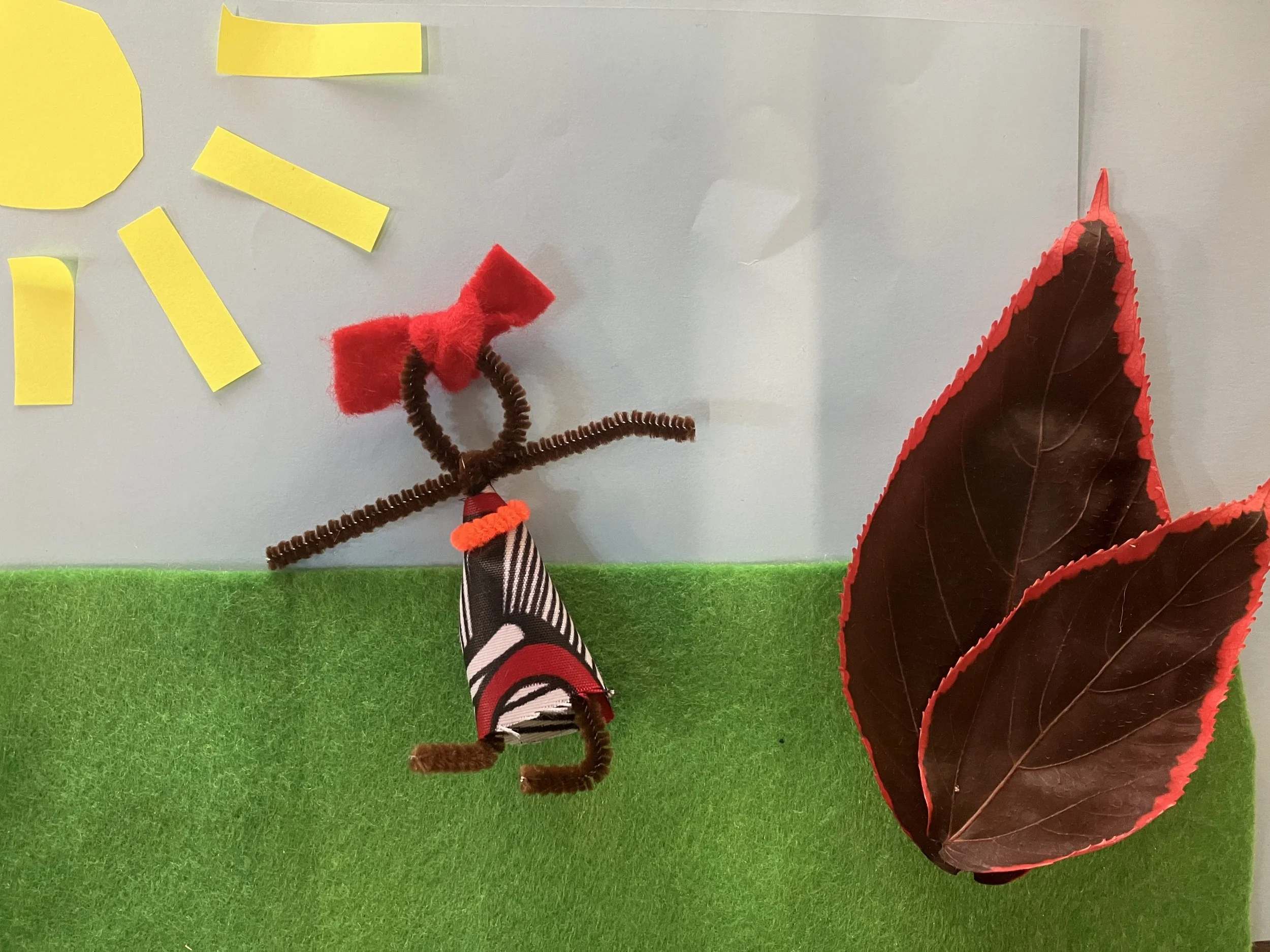
Q: People have often described your trainings as therapeutic. Do you see it that way?
Joanna:
I think story making can absolutely have therapeutic qualities. Being able to express something you've been carrying for a long time, giving shape to an experience you've never found words for, having that recognised by other people... those things can be deeply healing.
But I'm careful about calling it therapy because I'm not a therapist, and that's not actually the purpose of the workshop. The difference, for me, is in what happens after something has been expressed. If you've ever done art therapy, you might create something and then explore what comes up through making it. The artwork has done its job by helping something emerge.
In a story workshop, that's only the beginning. Once something has surfaced, we stay with it. We ask, What is this story really trying to say? How can it be shaped? Refined? Developed? How can the person make it into the story they genuinely want to tell?
So the artistic process matters just as much as the emotional one. People often tell me the workshops feel therapeutic, and I understand why. The group creates a space where people feel seen, listened to and recognised. What we're relying on is the group’s collective capacity for holding the space and each person's ability to share and to listen. But we're also holding that alongside a creative process. And the aim of that isn't simply expression; it's helping someone make something coherent that feels true to them.
That also means paying attention to what the group can hold. Sometimes strong emotions arise, and if they become overwhelming, you stop. You give people space. The workshop isn't there to push people beyond what feels safe or to replace professional support where that's needed.
Creating spaces where people can discover something of themselves, and something of one another through story... that's the work I wanted to dedicate my life to.
End of interview.
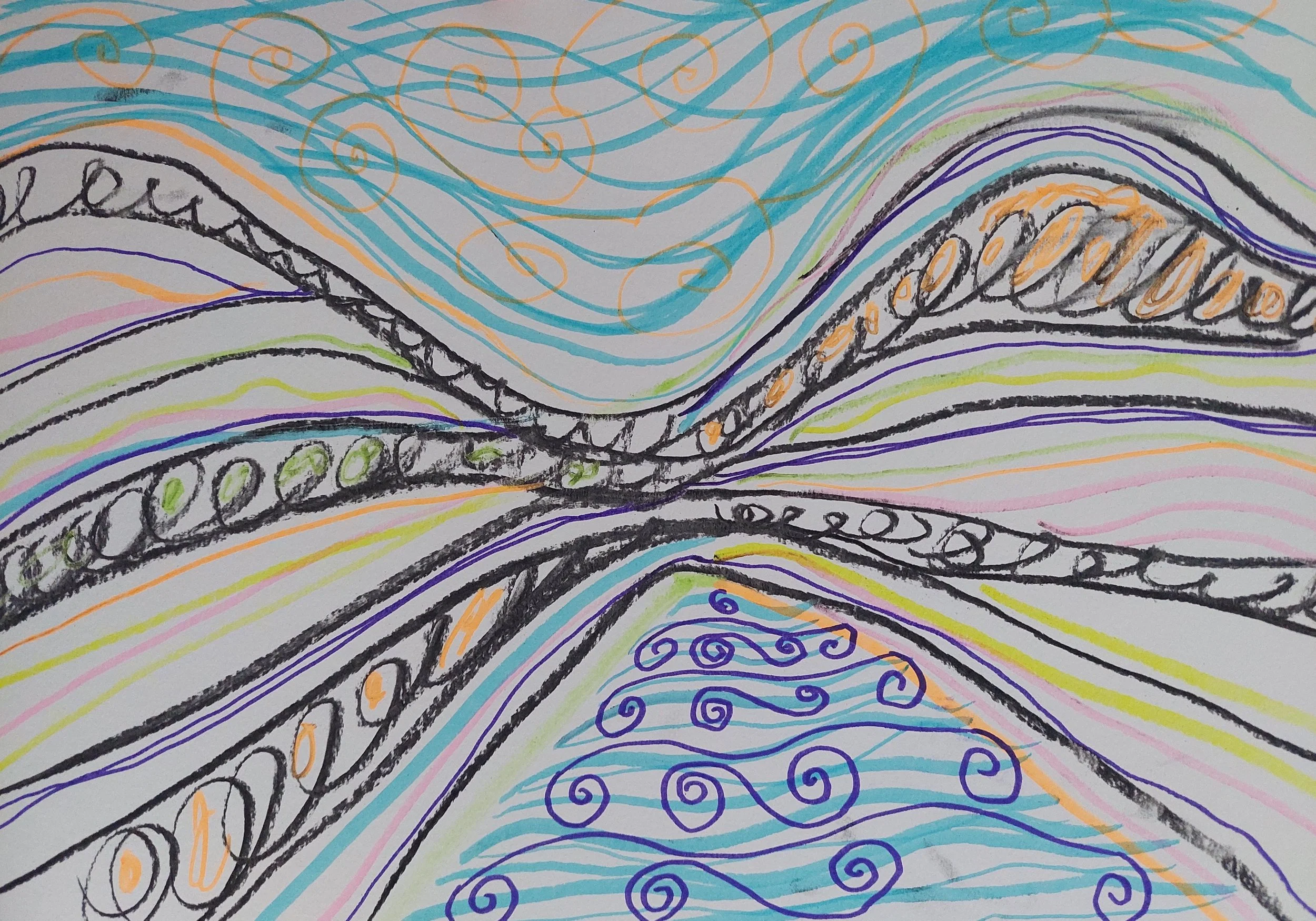
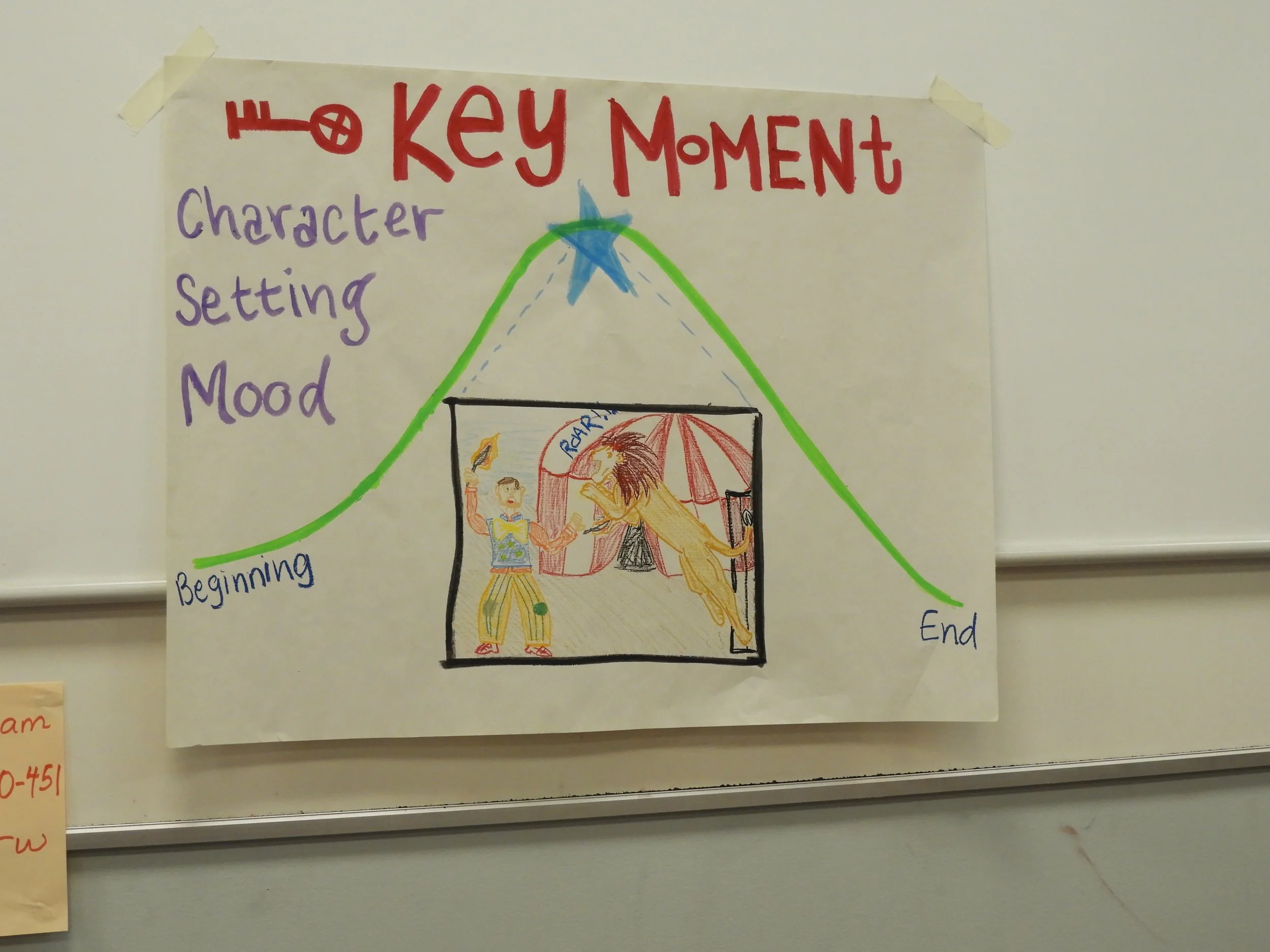
The River of Life image I created from an autobiographical creative exercises from the Creative Facilitation for Storytelling training, 2025.
As I left our conversation, I found myself returning to something Joanna had said earlier: Every workshop has taught me something new.
Perhaps that's why this work continues to evolve after more than three decades. Not because it has reached a final methodology, but because every story, every group and every creative process reveals another layer.
Integral Collective is a gathering point for conversations that cross thresholds — science, spirit, systems, psyche — and land somewhere more whole. In this series, I sit down with transdisciplinary practitioners whose work has shaped, nudged, or unsettled my own thinking.
This is for those of us who refuse tidy boxes — who weave frameworks, traditions, and methods into something alive and useful. May these conversations offer sparks, permission, and companionship as you shape your own integrative path.