Nature as Mirror with Dana Carman
“One of the key skills to thrive in complexity is to allow yourself to be lost.”
Dana Carman said this almost offhandedly during our interview for Integral Collective a few months ago, but it landed with weight. He followed it with something that has stayed with me:
“Most of the executives that I work with, it’s like they have to have the answers. They have to be clear and know direction, but when you have to have an answer and you’re dealing in complexity, it actually becomes a liability. So the capacity to drop out of your thinking and your plan and into your senses, to not know and to allow your heart and your belly and the signs around you to begin to speak to you is incredibly illuminating. And it’s also incredibly practical.”
His voice softened when he said that last part.
“I think we might be the two Dana Integrals walking the earth,” he joked when we were arranging to meet in Wicklow a few months ago.
I had connected with him through Hilary Bradbury from Action Research Plus, who a client suggested I should meet while I was visiting my family in Dublin. We chose The Happy Pear as our spot, one of my most beloved and wholesome restaurant experiences in Ireland.
We sat down for a coffee and ended up speaking for an hour and a half without noticing the time. We fell straight into the kind of conversation that leaps between the personal, the professional, and everything in between.
Dana and Hilary both spoke about their respective experiences with vision quests many years ago, that these were deeply transformative initiatory threshold moments that had shifted something profound in each of them in different ways.
As I walked away from the meeting, my heart felt full, my spirit alive and I had a gentle smile on my face. “If this is what a networking meeting looks like in my life,” I thought, “then I must be exactly where I’m meant to be on my path.”
On the drive home, I thought a lot about what we discussed, hungry to learn more. I asked Dana if he’d be interested in being interviewed for the next Integral Collective feature as I wanted to understand more about his journey and business creating modern-day vision quest experiences.
Dana is an integral coach and co-founder of Wayfinding Horizons, a nature-based methodology that invites leaders to disconnect from societal space and time and into the mirror of the natural world so they can gain innovative ways of addressing complex problems. His approach draws from decades of leadership development, and also from thresholds crossed in his own life.
Our conversation for Integral Collective traced many arcs: how grief and transition invite new forms of courage; what it means to walk with people in landscapes that know you; why traditional initiatory practices are needed in a time of socio-economic polycrises; and how tuning into the “time of the world” can reshape the choices we make in our own lives.
What follows is an edited Q&A from our Zoom call in September 2025:
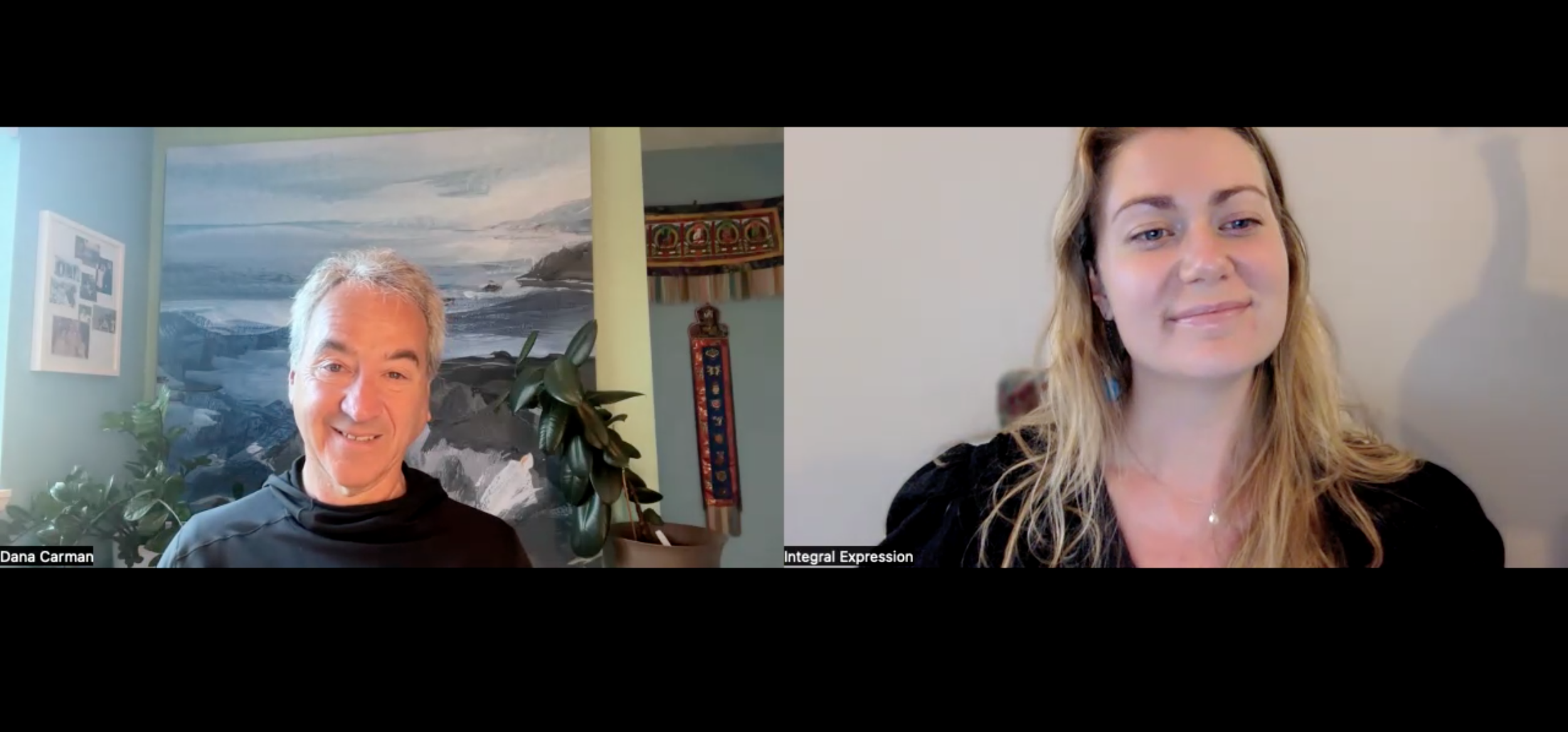
Q: What led you to create Wayfinding Horizons?
Dana Carman:
I spent years helping leaders navigate complexity inside organisations. But after a while, I started seeing that the challenges they were wrestling with weren’t just organisational. They were tied to identity, meaning, how someone orients to the world.
I went through my own period of unravelling about fifteen years ago. The end of a marriage and a company I co-founded. My health collapsed. My mother and brother died four days apart. It was like everything that had felt stable suddenly wasn’t.
I remember saying to a friend at the time, “I feel like I’m wearing a suit that doesn’t fit anymore.” A year earlier I’d felt in my groove. Then, after a series of mysterious things happened, I no longer recognised the life I was in.
During that time, the only place that felt like refuge was the natural world. I had heard of the vision quest tradition. Most healthy cultures have rites of passage—adolescent to adult, adult to elder. In modern Western culture, the rituals exist but the power has gone out of them.
I found an organisation running traditional vision quests and something in me knew I needed an experience where I could bring my confusion and my tears, and find the courage to see what to do next.
It was a nine- or ten-day process. Three nights and four days solo, with just water. No tent. A sleeping bag and tarp. You learn safety. You start the programme in clock time, chronos time. But once you cross the threshold, you shift into different rhythms: kairos, natural time, even deep time. You stop living by the watch.
Something changed in me out there. At one point, I began to see my parents and grandparents as human beings with their own struggles. Not as who they were to me, but who they were as fellow human beings. That cracked something open.
When you return, there’s an integration phase. In a way, the coaching I do now is that integration phase. I began guiding vision quests with the man who had guided mine. Over time I realised I wasn’t meant to run ten-day quests forever, but I could bring the essence of that threshold experience into smaller wayfinding journeys.
And I’ve been discovering what that looks like ever since.
There’s also something important about working on land that knows you. I’ve walked the hills in Ireland for three years and they’re becoming part of me. I walk with clients there, and the land holds them in a way I can’t explain. Same with the Columbia River Gorge, Siskiyou mountains and Marin Headlands where I’ve walked for two decades. These places have shaped me. Bringing leaders into landscapes that have shaped you changes the work.
Q: You often speak about “stepping out of societal time.” What does that mean in practice?
Dana Carman:
Most of us live in a time-signature shaped by speed, productivity, and a constant orientation to the next thing. When you stay in that rhythm, your solutions tend to repeat the same logic that created the problem.
When you go into wild nature—truly go—it invites a different relationship with time. There’s no schedule, no performance metric, no social identity to manage. You begin to sense what I call “the time of the world,” which is slower, cyclical, and more responsive.
From that place, a different kind of intelligence becomes available. Not abstract insight but actual, lived insight.
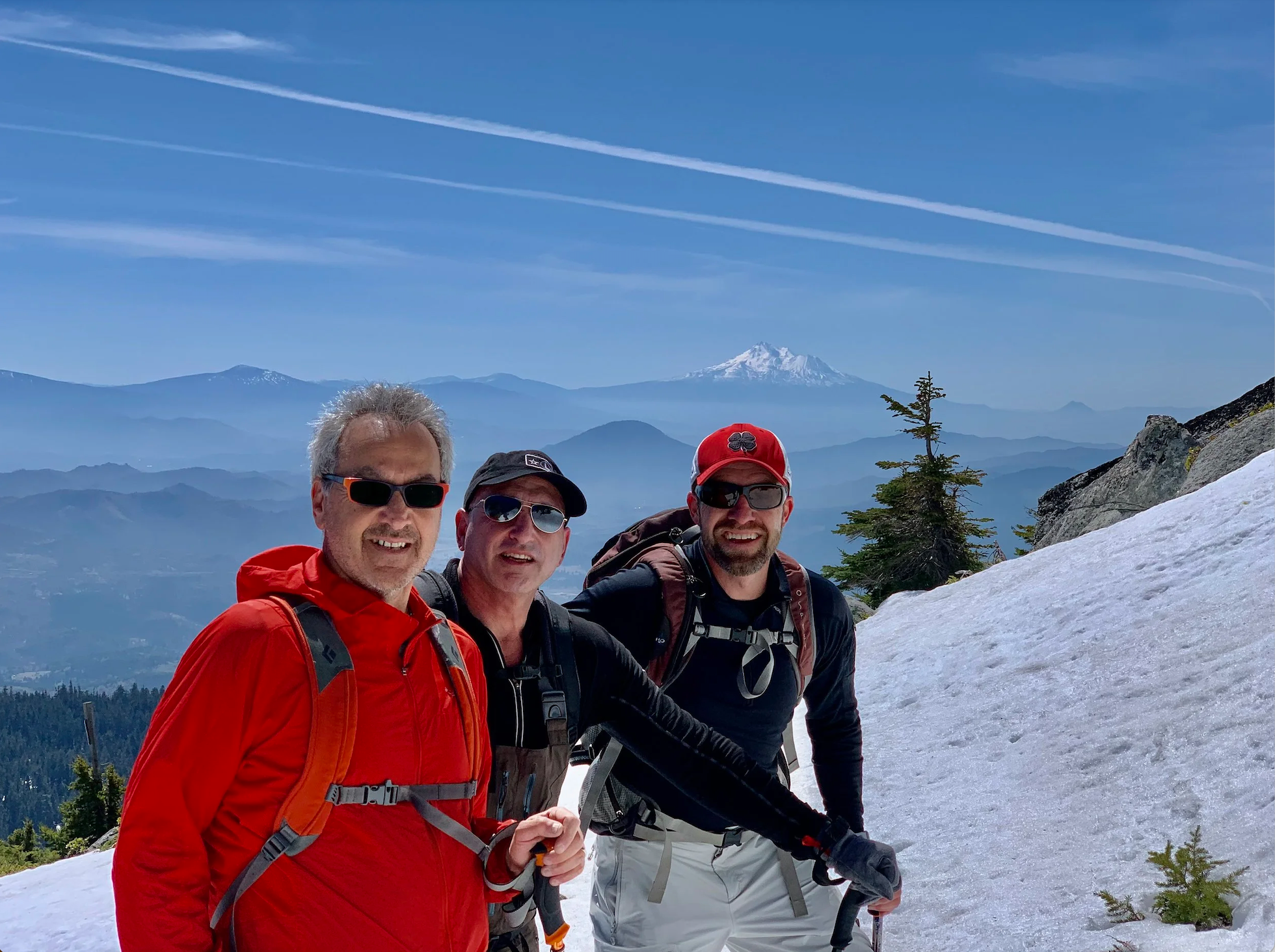
From left: Dana Carman and two clients on a Wayfinding expedition in the Siskyou Mountains, Oregon.
Q: How does nature act as a mirror in that process?
Dana Carman:
Nature doesn’t give feedback the way a human coach does. It doesn’t soothe you or challenge you in words. It interacts with your nervous system, your patterns, your assumptions—all the things you carry unconsciously.
When people spend extended time alone in a landscape, they start seeing themselves through what the land reflects back: where they push, where they hesitate, where they’re avoiding something essential.
It’s a very honest mirror. And honesty, when held with care, becomes liberating.
Q: What becomes possible for leaders when they cross a threshold like this?
Dana Carman:
Many describe it as a reorientation. They come in with a knot—something they can’t quite name but that feels stuck.
Wayfinding is a way of walking with the fundamental questions of your life. Most of us try to get rid of the difficult questions rather than let them inform us.
We step out of chronos time and into kairos time. We cross a ritual threshold. We let go of thinking about the question and allow ourselves to sense it. That’s when something real begins to emerge.
What people often find isn’t a five-point plan; it’s a new organising centre. A deeper sense of what’s theirs to do now.
In this time of metacrises, we need people whose choices come from coherence rather than urgency.
Q: Why do you feel initiatory experiences are relevant right now?
Dana Carman:
In many indigenous cultures, initiation acted as a bridge between one stage of life and the next. It taught you how to carry responsibility in a way that served more than your own survival.
Modern society has lost those structures. But the psychological need for initiation never disappeared. So often when people hit big life transitions, like death, grief, or personal upheavals, they feel lost.
Wayfinding doesn’t replicate traditional practices, but it honours the essence: stepping into the unknown in order to return with a truth you can live by.
One of the core questions we walk with is, “What time is it in the world?” And close to that: “What time is it in my life? Where is energy moving? Where is it frozen?”
When we can feel both the flow and the frozenness, something begins to thaw. Under the frozen places there’s often grief or anger that needs space. When it has space, energy moves again.
This is part of coaching too. Not fixing, but opening enough room to tell the truth about where we’re stuck. From there, we discover small experiments. We test assumptions that have shaped our life. We speak honestly and compassionately about our inner and outer contradictions. We ask what happens if we follow our energy in a direction we’ve been afraid to go.
We’re living in what some call a time between worlds. Structures are dissolving. Things are changing. And in the middle of the uncertainty, there’s both heartbreak and beauty. People feel an impulse to care. To be part of the evolution rather than look away.
So the essential questions remain: what time is it in the world, and what time is it in my life?
Q: If you could offer one question for people reading this to sit with, what would it be?
Dana Carman:
What is the threshold you already feel approaching—and what might become possible if you befriended this place instead of trying to outrun it?
End of interview
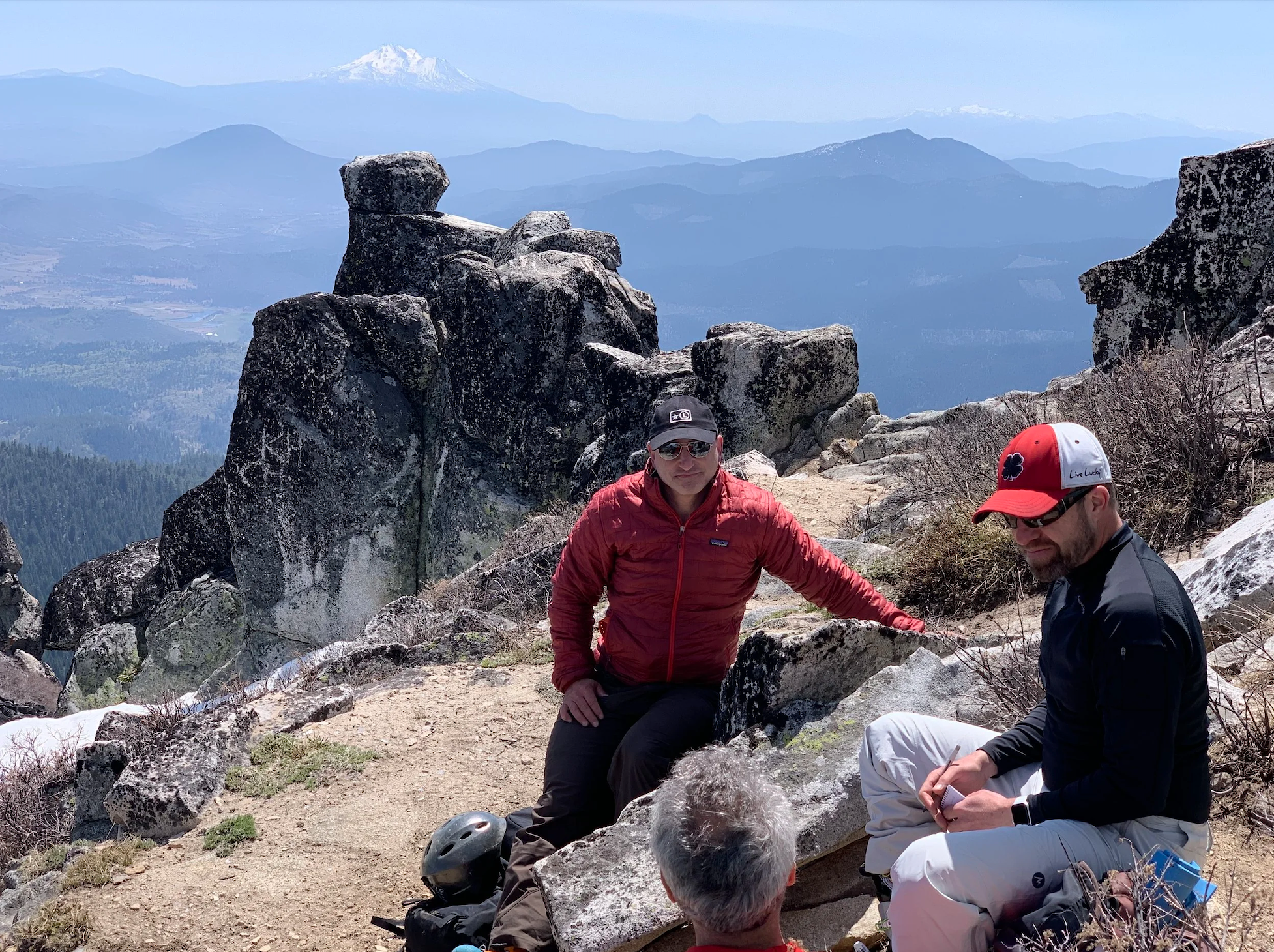
Two clients on a Wayfinding expedition in the Pacific Northwest.
Integral Collective is a gathering point for conversations that cross thresholds — science, spirit, systems, psyche — and land somewhere more whole. In this series, I sit down with transdisciplinary practitioners whose work has shaped, nudged, or unsettled my own thinking.
This is for those of us who refuse tidy boxes — who weave frameworks, traditions, and methods into something alive and useful. May these conversations offer sparks, permission, and companionship as you shape your own integrative path.